 Express Products
Choosing a suitable capacity litter bin is crucial to preventing overflow and littering.
A typical outdoor street litter bin has a capacity ranging anywhere from 60 to 135 litres. For many types of outdoor areas, such as leisure spaces, parks, local retail areas, low- to medium-density housing estates, and rural roads, this offers enough capacity to prevent the bin from overflowing.
However, Environmental charity Keep Britain Tidy recently revealed that only 9% of surveyed locations in England were found to be litter-free, with over three quarters of people believing the country’s litter problem has grown worse in recent years.
Litter therefore remains a persistent problem, and with today’s on-the-go lifestyle sometimes resulting in higher volumes of waste than anticipated, it’s crucial for local authorities and organisations to deploy the right type of litter bin for the area.
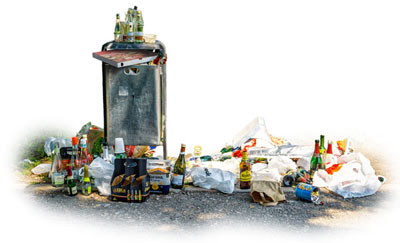
With the right bin for the job, you can help prevent scenes like this...
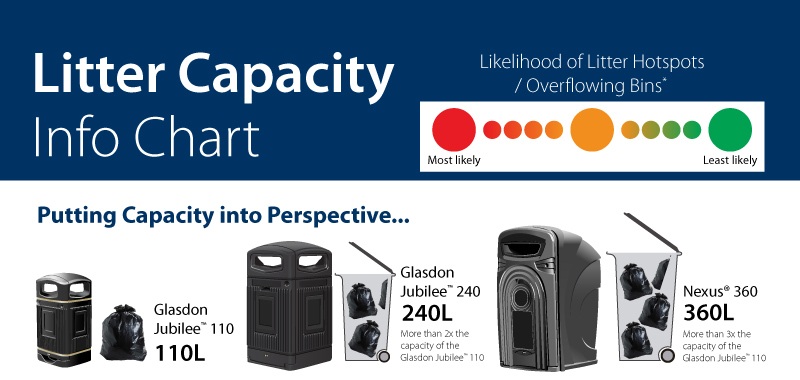
But... it’s not always easy to predict waste volumes. That’s why we’ve compiled the below chart to help you identify appropriate sizes and types of litter bin solutions available for your public spaces, and where they should be located to best reduce the chances of your bins overflowing.
The following areas are listed in order of highest potential litter volume to least potential litter volume.
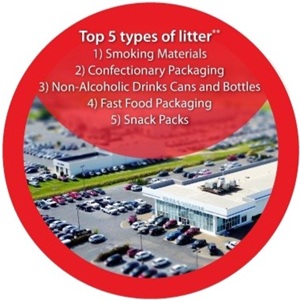
Retail Parks & Industrial Estates
Litter Volume: High
Busy commercial areas with many people coming and going will naturally generate more waste, largely from food and drinks packaging.
Recommendation: Large 200-360L litter bins in central areas, with smaller 80-140L litter bins spread throughout.
Examples: Nexus® 200, Nexus® 360, Combo Delta™, Plaza®
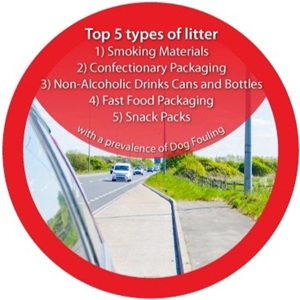
Lay-bys, Underpasses, Bridleways, and Cycle Ways
Litter Volume: High
Despite the often-remote nature of these locations, they remain a busy thoroughfare for passing vehicles, pedestrians, and cyclists.
Recommendation: 240-360L wheelie bin housings for locations with direct vehicle access, or 80-140L bins and 25-50L post/wall mounted bins for locations without.
Examples: Nexus® City 240, Glasdon Jubilee™ 110, Trimline 25™
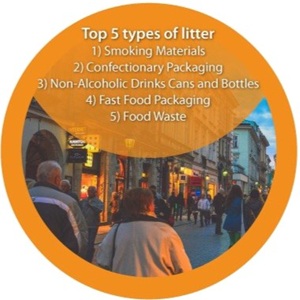
High Streets & Town Centres
Litter Volume: Medium
With plenty of foot traffic and potential litter, pedestrian areas such as these benefit from litter bins that match the aesthetic of their surroundings.
Recommendation: 200-360L wheelie bin housings with co-ordinating 100-140L bins.
Examples: Glasdon Jubilee™ 240, Glasdon Jubilee™ 110
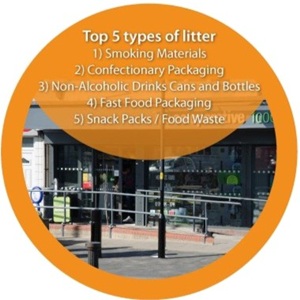
Local Retail & Commercial Areas
Litter Volume: Medium
Consistent foot traffic combined with the prevalence of food and drink packaging make these areas susceptible to littering.
Recommendation: 140-200L litter bins/wheelie bin housings accompanied by smaller 80-149L litter bins.
Examples: Nexus® City 140, Nexus® 200, Topsy 2000™
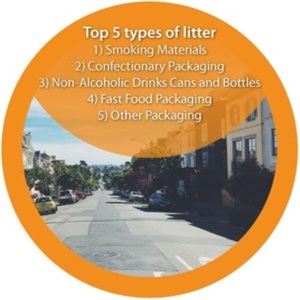
Main Roads
Litter Volume: Medium
Whether it’s an A-road or an artery road through a town or city, a moderate amount of rubbish from pedestrians and others is likely.
Recommendation: 100-140L litter bins/wheelie bin housings distributed evenly along the road.
Examples: Glasdon Jubilee™ 110, Plaza®
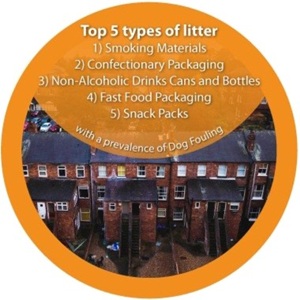
Urban Housing
Litter Volume: Medium
In confined urban streets and spaces, pavements can often be obstructed by larger bins, meaning smaller slimline bins might be the way forward.
Recommendation: 140-200L litter bins for wider streets, and compact 50-100L bins for high density areas.
Examples: Nexus® City 140, Glasdon Jubilee™ City 100, Streamline Jubilee™, Mini Plaza®

Parks & Recreational Areas
Litter Volume: Medium
With people spending considerable time in parks and other outdoor recreational areas, it’s inevitable that these areas will generate a significant level of waste.
Recommendation: 200-240L wheelie bin housings with co-ordinating 80-140L litter bins plus 25-50L post/wall mounted bins.
Examples: Glasdon Jubilee™ 240, Origin™ Curve 110, Sherwood™, Retriever 50™
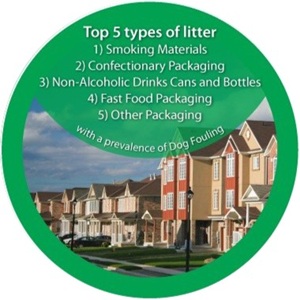
Suburban Housing
Litter Volume: Low
Residential neighbourhoods are rarely busy and are frequented mainly by those taking a stroll, although dog waste can prove a persistent problem.
Recommendation: 80-150L litter bins for medium density areas, and 50-100L litter bins for low density areas.
Examples: Glasdon Jubilee™ 110, Mini Plaza®, Retriever 35™, Fido 25™
Rural Roads
Litter Volume: Low
While it may seem like rural roads need no litter bins at all, there’s still the odd hiker or driver that may need to dispose of their waste.
Recommendation: 50-100L litter bin is ideal, although larger bins can be considered to reduce the frequency of collections required.
Examples: Topsy 2000™, Mini Plaza®
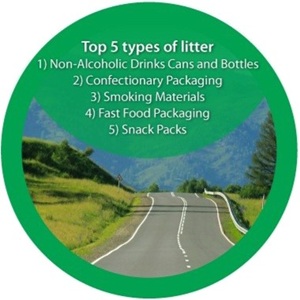
As can be seen above, smoking materials are one of the most prominent types of litter, being found in almost all environments. According to Keep Britain Tidy, smoking related litter was found in 70% of places they surveyed, followed by confectionary wrappers at 52%, drinks bottles/cans at 31%, fast-food packaging at 22%, vape-related litter at 17%, and crisp/snack packets at 16%.
Therefore, for most public spaces, it’s worth adding smoking control to your litter bins to help reduce cigarette litter. Most Glasdon litter bins can be outfitted with a cigarette stubbing plate or ashtray on top of the hood for this purpose. Alternatively, we offer a range of dedicated cigarette bins that can be placed in smoking areas or popular hotspots to help tackle the issue at its source.
If you require any additional information, or if you have any questions or queries about our products, don’t hesitate to contact us or live chat with our team of Waste Management experts.
To help determine which litter bin is best for you at a glance, please visit our article on choosing a litter bin.