 Express Products
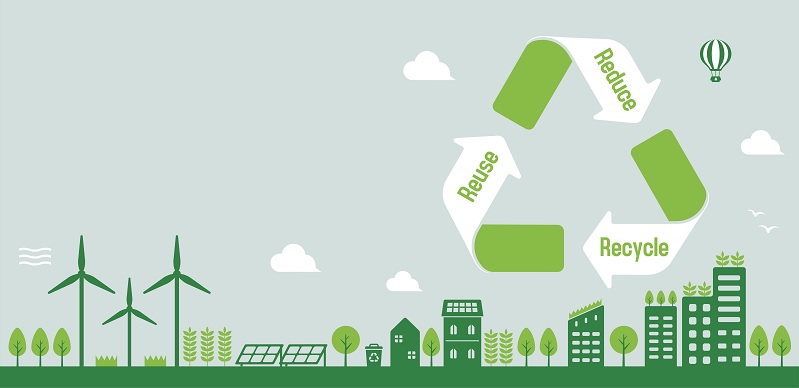
The Three Rs are a crucial set of principles for advancing sustainable living and establishing an efficient waste management system.
What are the Three Rs?
Reduce, Reuse, Recycle is a condensed version of the 5-step Waste Hierarchy, which outlines a way to cut down on the amount of waste that gets thrown away or sent to landfill.
Before disposing of waste, the hierarchy asks whether we can avoid creating the waste in the first place, or if we can repurpose materials and use them again. The method at the top of the hierarchy is the most preferred option, and where you should turn to first, while the method at the bottom is the least preferred, and should be a last resort.
In this hierarchy, the three Rs work together to reduce usage, promote the reuse of materials, and encourage recycling where possible.
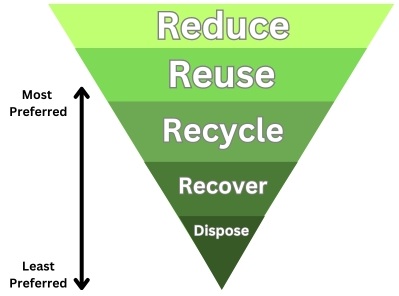
Following the waste hierarchy is essential for minimising waste and achieving a circular economy.
Why Should We Reduce, Reuse, and Recycle?
While sustainability and environmental preservation is the primary focus of the three Rs, they also bring about numerous economic and social advantages.
Environmental Benefits: The environmental benefits of the three Rs are far-reaching, including better conservation of natural resources, a reduction in greenhouse gas emissions, protection of ecosystems and biodiversity, and a general reduction in the negative environmental impacts associated with waste generation and disposal.
Economic Benefits: There is a clear correlation between reduced waste and reduced costs when it comes to implementing the three Rs. By decreasing the amount of new purchases and reutilising existing items, individuals, businesses, and communities can all achieve financial savings. Moreover, the growth of the recycling industry can also create jobs and boost the economy.
Social Benefits: Embracing the three Rs often involves local communities, workplaces and families working together. What’s more, the sense of duty can motivate individuals to take action and contribute to a more sustainable future in their day-to-day lives.
How to Use the Three Rs
Each one of the three Rs is significant in its own way, but combining them in a unified approach to waste management is where the benefits can really start to compound.
In the following section, we will evaluate the significance of each step and explore techniques for incorporating them into the daily routine of your business.
Everything we produce and consume has an impact on the environment. Therefore, the first step to reduce waste generation is to address the problem at the source. By producing less waste overall, there is less to clean up, and less to worry about when moving onto the other steps of the waste hierarchy. That means Reduce is often the most impactful of the three Rs, which is also why its placed as the most important.
◊ Develop a Sustainable Supply Chain:
- Purchase products with the least packaging and longest lifespans.
- Choose local suppliers to reduce shipping emissions.
- Buy and transport in bulk to prevent unnecessary journeys.
- Seek eco-friendly alternatives to packaging.
◊ Streamline Operations:
- Conduct regular inventory checks to avoid wasted stock.
- Turn electrical devices off when not in use.
- Consider investing in solar panels for energy generation.
◊ Avoid Single-Use Items:
- Replace disposable cutlery/cups with washable alternatives.
- Replace paper towels with hand dryers.
- Use refillable containers rather than buy new ones.
- Opt out of mailing lists to reduce your intake of junk mail.
◊ Reduce Paper Usage:
- Go paperless or limit printing to only essential documents.
- Use email, messages, or intranet notices for regular communication.
- Make two-sided copies whenever possible, and store them somewhere memorable for future use.
Before discarding an item, consider whether it could be used again. Even if an item’s original use is no longer valid, it could still have a purpose or be valuable in a different way. Reusing an item not only benefits the environment but can also be financially wise if you opt to sell it. Keep in mind that just because you no longer find something useful, doesn't mean someone else won't.
◊ Reuse & Repurpose:
- Find new uses for everyday items e.g. a cardboard box can be turned into the perfect storage space.
- Repurpose business assets e.g. a banner used at an exhibition might feel right at home in your reception.
- Keep packaging, grocery bags, and tupperware for future use.
◊ Pass to a New Home:
- Sell things second-hand, whether it be clothing, electricals, or even furniture.
- Donate unwanted items to charity shops or even family & friends.
- Exchange items with other organisations for mutual benefit.
◊ Mend and Repair:
- Try to fix anything with minor defects before replacing it.
- Contract a tradesperson to see if major problems with an appliance can be repaired.

While recycling is less preferable to the previous two options, it by no means holds any less significance. When you have no other choice but to dispose of an item, ensuring its materials are repurposed into something new helps prevent the depletion of our planet’s natural resources. Once an item has reached the end of its life and cannot be used any longer, make sure that it’s recycled correctly to be converted into new products.
◊ Start a Recycling Programme:
- Determine which types of waste your business generates most.
- Buy recycling bins for the relevant waste streams.
- Hire a waste collection company to collect the recyclables.
◊ Ensure Correct Disposal:
- Provide clear, concise signage to instruct users and reduce contamination.
- Educate staff on correct usage, and motivate them to take ownership.
- Monitor participation and recycling rates, making adjustments where needed.
◊ Reap the Rewards:
- Earn rebates for good quality recyclables.
- Benefit from more motivated staff and a contribution to global sustainability.
- Aid the transition to a circular economy.
Looking to Start a Recycling Scheme?
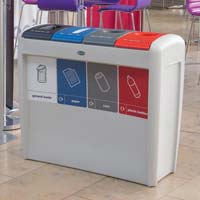
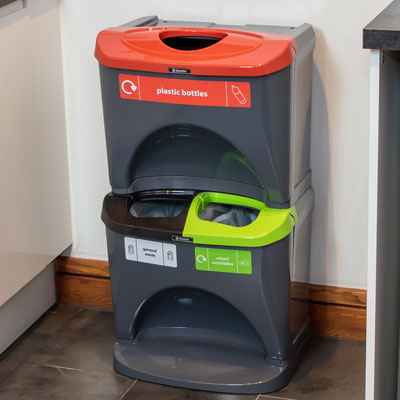
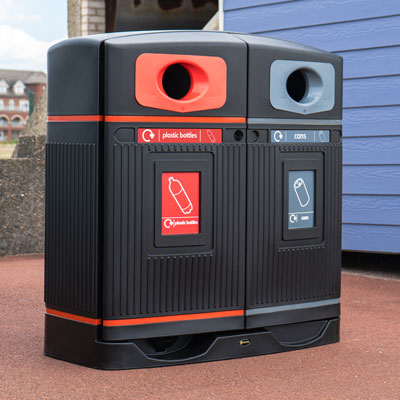
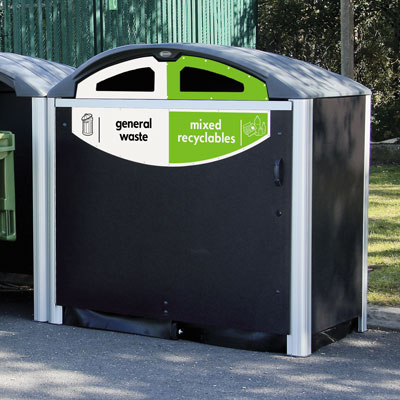
At Glasdon, we offer a range of Commercial Recycling Bins designed to facilitate efficient indoor and outdoor recycling programmes. Our collection offers a variety of materials, styles, and capacities to cater to the specific needs of your organisation.
|
Nexus® Evolution |
Nexus® Stack |
Glasdon Jubilee™ |
Modus™ Housings |
||||
 |
 |
 |
 |
||||
|
Learn more |
Learn more |
Learn more |
Learn more |
By following the three Rs, businesses and organisations can benefit financially and socially from an environmentally responsible approach to waste management.
After analysing each principle and learning suggestions for implementation, try incorporating them into your business. You may be surprised by how much it can increase efficiency and reduce your costs.
If you require more information on any of the topics discussed, please Contact Us to talk to our team of specialists.