 Express Products
A Simple Step That Improves Recycling Rates
Effective recycling relies on clean, uncontaminated waste streams. Across workplaces, transport hubs, retail environments, educational facilities, and public spaces, one common issue can thwart recycling efforts: liquids being disposed of alongside recyclable materials.
According to DEFRA, UK businesses generate over 40 million tonnes of commercial and industrial waste annually, making effective waste segregation critical to maintaining recycling quality. Partially full bottles, beverage containers, and food packaging containing residual liquids can contaminate entire recycling collections, leading to increased processing costs, whilst also reducing the quality of recyclable materials. This remains a significant challenge throughout the waste management industry, with WRAP reporting that 16.6% of material entering UK Materials Recovery Facilities (MRFs) is classed as contamination. WRAP also reports that roughly 81% to 84% of people mix non-recyclable items into recycling streams, a habit that translates directly into commercial and workplace bin collections.
For organisations striving to improve sustainability performance and achieve waste management targets, separating liquids from recyclables is relatively simple but highly effective.
The Impact of Liquid Contamination
When liquids enter dry mixed recycling streams, they can create various challenges throughout the waste management process.
Reduced Recycling Quality
Paper, cardboard, and other recyclable materials can become saturated when mixed with drinks, water, or food liquids. Once contaminated, these materials may no longer be suitable for recycling and can instead be diverted to energy recovery sites or landfill.
Increased Processing Costs
Contaminated loads require additional sorting and handling. Recycling Now notes that in some cases, contamination levels can be high enough that entire lorry-loads of recycling are rejected, increasing disposal costs and reducing the value of recovered materials.
Health and Hygiene Concerns
Liquids left in waste and recycling containers can create unpleasant odours, encourage bacterial growth, and attract vermin and pests. This can negatively impact workplace hygiene and the user experience in public environments.
Operational Challenges
Leaking containers can create spillages inside recycling bins, collection vehicles, and storage areas. This can increase cleaning requirements and contribute to maintenance costs for facilities management teams.
Why Organisations Should Encourage Liquid Separation
For businesses and organisations in the public sector, improving recycling rates is about more than just environmental responsibility. It can also support operational efficiency, compliance objectives, and company sustainability goals.
Encouraging people to empty bottles and containers before disposal can help:
- Improve the quality of recyclable materials.
- Reduce contamination rates.
- Increase recycling rates.
- Support waste reduction targets.
- Enhance cleanliness and hygiene standards.
- Demonstrate commitment to environmental best practice.
As sustainability reporting and environmental accountability become increasingly important, even small improvements in waste segregation can contribute to larger and wider environmental initiatives.
Practical Ways to Correctly Recycle Liquids
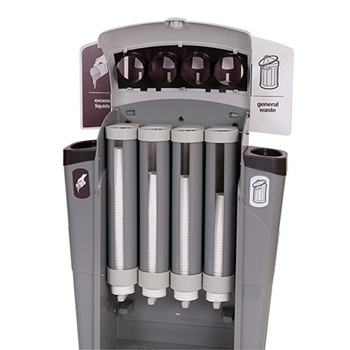
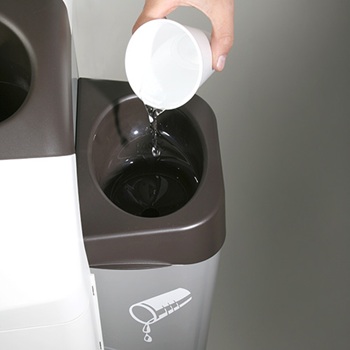
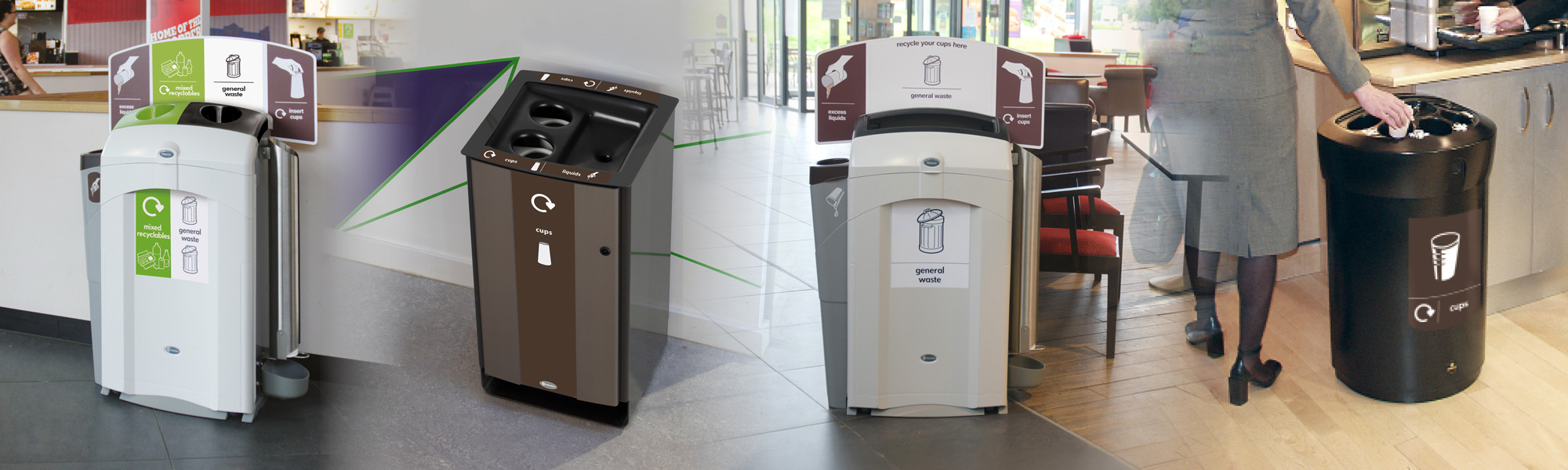
Many recyclable containers still contain small amounts of liquid when they reach recycling stations and disposal points. Providing clear guidance and appropriate solutions, such as integrated liquid reservoirs, can help people easily and correctly dispose of any unwanted liquids, whilst an integrated drip tray can help capture any residual liquids.
Empty Bottles Before Recycling
Encourage staff, visitors, customers, and members of the public to completely empty drinks containers into any available reservoirs before placing them into recycling bins.
Provide Dedicated Liquid Disposal Points
Create dedicated liquid disposal points by installing recycling stations with integrated liquid reservoirs. This will enable people to simply pour away leftover liquids before disposing of any bottles, cans, and cups, maintaining cleaner recycling streams and reducing contamination in the process.
Create Clear Recycling Stations
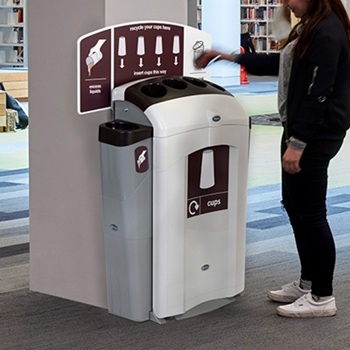
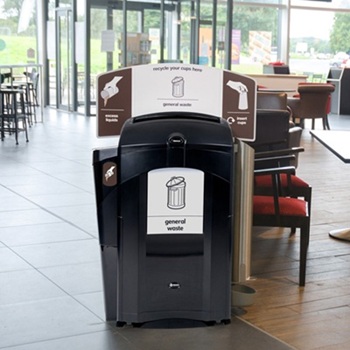
Waste management systems are most effective when the people using them can quickly and immediately understand how to correctly dispose of things. Signage, colour coding, and clear labelling, such as a distinct visual graphic for a reservoir side pod, can improve recycling practices and reduce disposal errors and cross-contamination.
Position Liquid Disposal Solutions Strategically
Locations such as office buildings, university campuses, school grounds, transport hubs, shopping centres, stadiums, and leisure facilities will often generate high volumes of drinks containers. Installing recycling stations with dedicated liquid disposal reservoirs near shops, kiosks or fast-food restaurants, as well as in canteens, break areas, shared kitchens and even meeting rooms and hallways leading to gathering spots can help encourage correct waste segregation right at the point of disposal.
Looking to install recycling bins that allows for quick and easy disposal of liquids? Invest in long-term recycling stations with dedicated liquid disposal reservoirs.
Do you already have one of our recycling stations? Contact us to find out how you can add a liquid reservoir to it.
Supporting Better Recycling Habits
Creating and maintaining clean, uncontaminated recycling streams starts with providing users with a simple and convenient way to separate liquids from recyclable containers. When organisations combine clear waste segregation practices with dedicated liquid collection solutions, they can reduce contamination, improve recycling efficiency, and support their wider sustainability objectives.
As recycling targets continue to increase across Europe, ensuring liquids are removed before recyclables enter the waste stream is an easy and likewise practical step that can make a measurable difference to environmental performance.
References
* https://www.wrap.ngo/resources/guide/tackling-contamination-dry-recycling
* https://www.recyclenow.com/how-to-recycle/recycling-contamination
* https://www.wrap.ngo/media-centre/press-releases/84-uk-households-are-unintentionally-contaminating-their-recycling-bins
* https://www.southwark.gov.uk/waste-and-recycling/household-waste-and-recycling/recycle-right-empty-rinse-recycle-repeat
* https://www.circularonline.co.uk/news/nearly-one-fifth-of-recycling-ends-up-unrecyclable-due-to-contamination/
* https://www.eea.europa.eu/en/topics/in-depth/waste-and-recycling
* https://environment.ec.europa.eu/topics/waste-and-recycling_en
* https://european-recycling.com/plastic-recycling/
* https://www.recycling-magazine.com/en/24583/nearly-17-of-recycling-is-wasted-due-to-contamination