 Express Products
The UK has introduced a new law for publicly accessible venues and events to make things safer for the British Public.
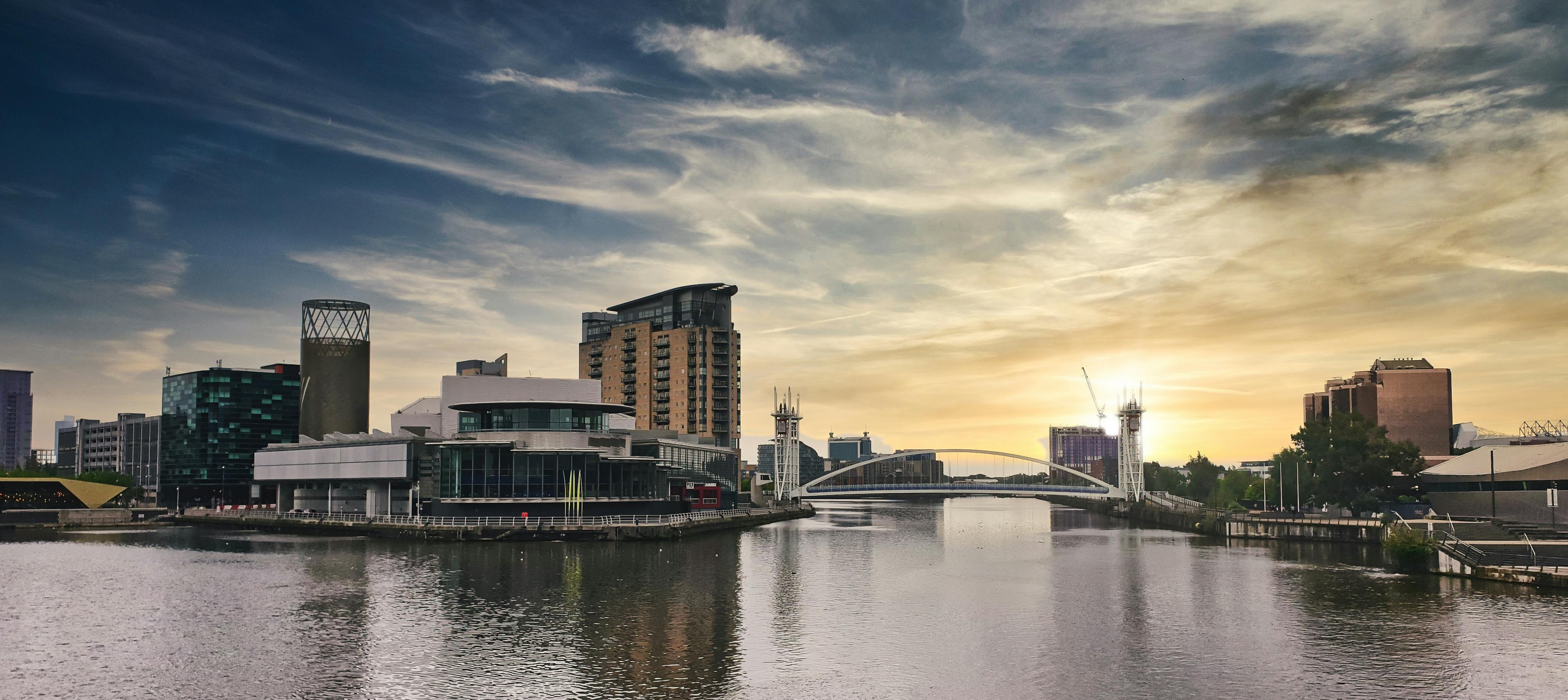
On April 3rd, 2025, the government's Terrorism (Protection of Premises) Act 2025, also known as Martyn’s Law, gained royal assent, officially introducing it into British law. Named after Martyn Hett, one of the 22 victims of the Manchester Arena terrorist attack, Martyn’s Law aims to improve and unify security preparedness and practices across UK public venues and events to better protect the British public.
For venues and events that fall under the scope of Martyn’s Law, preparedness focusses on four main actions during an emergency:
- Evacuation: Safely and quickly move people out of the building.
- Invacuation: Safely relocate people into a designated, secure internal space.
- Lockdown: Secure the premises to keep attackers out.
- Communication: Swiftly alert staff and customers about the threat.
While a rare occurrence, terrorist attacks can have devastating effects on public lives and a country’s population, as well as a country’s economy. In the wake of several smaller terrorist attacks throughout the years, alongside larger attacks such as the Manchester Arena attack in 2017, Martyn’s Law will come into full effect at least 24 months after its introduction.
What Venues and Events are Affected by Martyn’s Law?
A new law can be confusing, especially when it comes to finding out who and what are affected, and how they are affected. As things stand, Martyn’s Law affects both publicly accessible premises and venues as well as events in different ways and to varying capacities.
Venues and Premises
According to Martyn’s Law, qualifying premises and venues must satisfy the following criteria to fall under the scope of the Law:
- The site must be a building, or a building or other land
- A building can include a part of a building or group of buildings
- There is always a building or part of a building on site that is accessible to the public by any extent
- Note: Restricting access, for example, to individuals who have paid to enter, have a ticket or pass, or are members or guests of a club, association or similar body, DOES NOT exclude the premises from being treated as accessible to the public.
- The premises and venues are used for one or more of the following purposes:
| Shops etc | Premises involved in the sale of goods and services, including shops, retail units, showrooms, post offices, banks, fuel stations, and shopping centres |
| Food and drink | Bars, pubs, restaurants, cafés and food halls |
| Entertainment and leisure activities | Nightclubs, theatres, cinemas, concert halls, arenas, theme parks, zoos, aquariums, amusement arcades, casinos, gyms, leisure centres, swimming pools and bowling alleys |
| Sports grounds | Sports arenas or stadiums with sports or other competitive activities taking place in the open air and where accommodation for spectators has been provided |
| Libraries, museums and galleries | Libraries, museums and galleries, including archives or sites for the outdoor or partially outdoor exhibition and/or display of a collection of works or objects (considered of scientific, historic, artistic or of cultural interest) |
| Halls etc | Village halls, community centres, venues event or activity hire, exhibition halls and conference centres |
| Visitor attractions | Attractions of cultural, historic, touristic or educational value, including heritage railway lines |
| Hotels etc | Hotels, hostels and holiday parks |
| Places of worship | Churches, mosques, synagogues, temples, gurdwaras, cathedrals, and other places of worship |
| Health care | Hospitals, primary care clinics, doctor and dentist surgeries |
| Bus stations, railways etc | Railway, bus and coach stations, tramway stations or other stations part of a transport system using a mode of guided transport and is not a trolley vehicle system |
| Aerodromes | Facilities used for the landing and departure of aircrafts, excluding aerodromes for military purposes or if there already is a security plan in force |
| Childcare | Premises used for early years provisions, including day cares, pre-schools and nurseries |
| Primary and secondary education | Educational facilities and schools for children under the age of 16, including alternative provision academies and pupil referral units |
| Further education | Premises used for full-time education, including colleges, sixth-form colleges, and either wholly or partly publicly funded independent training providers |
| Higher education | Universities and associated institutions |
| Public authorities | Premises used by a public authority which provide facilities or services to members of the public, including household waste recycling centres |
- It is reasonable to expect that every so often 200 or more people will be in attendance at the premises at the same time.
- The premises do not belong or form part of the following:
- Houses of Parliament
- Devolved legislatures and devolved governments
- Premises used by the Houses of Parliament; the Scottish Parliament or a part of the Scottish Administration; the Senedd Cymru or the Welsh Government; or the Northern Ireland Assembly or a Northern Ireland Department
- Parks
- Gardens
- Recreation grounds
- Sports grounds (which are not designated sports grounds)
- Other open-air premises used for recreation, exercise and/or leisure
Commercial Premises
Because they commonly restrict access to the general public, commercial premises—such as warehouses or factories operating strictly on an appointment basis—may not fall under the scope of Martyn’s Law.
This includes, but may not be limited to:
- Factories
- Warehouses
- Distribution centres
- Private offices
- Manufacturing plants
- Staff-only facilities
Events
Unlike premises and venues, events must satisfy the following criteria to fall under the scope of the Law:
- It takes place in a building or on other land, or a building or other land, including land without buildings.
- It takes place at a venue that is not already classified as enhanced tier under Martyn’s Law.
- It is accessible to the public.
- It is reasonable to expect that at some point during the event, 800 or more people may be in attendance at the premises or within the venue at the same time for the event.
- It enforces measures to check whether members of the public have paid, have a ticket or pass, or are members (or guests) of a club, association or similar body (including sports clubs, trade associations, social clubs and professional bodies) to gain access.
- Note: This applies to both paid and free events. Excluded, however, are other forms of entry conditions, such as specific search criteria, dress codes, or a suggested donation upon entry.
- It does not take place at excluded premises, such as Houses of Parliament and transport premises, such as applicable airports, national rail and underground premises, international rail premises and port facilities.
How are Venues and Events Affected by Martyn’s Law?
Venues and events within the scope of Martyn's Law will be required to have appropriate public protection procedures in place. Enhanced tier premises and qualifying events will also be required to assess vulnerabilities and implement reasonably practicable public protection measures.
To help with this, the law features a ‘Tiered System’, with each tier dependent on the expected number of people present at an event or in a venue or business.
Locations with expected attendance numbers of 200 people and more will be delegated into one of two tiers:
Standard Tier
- Expected Attendance: 200 to 799
- Measures:
- Simple procedural preparation (e.g. basic training and staff awareness).
- Notify the Security Industry Authority (SIA).
- Have plans in place for evacuation, invacuation, lockdown and communication.
Enhanced Tier
- Expected Attendance: 800 or more
- Measures:
- All standard tier requirements (see above).
- Formal terrorism risk assessment.
- Physical public protection measures (e.g. CCTV, bag checks, or vehicle barriers).
- Maintain appropriate documentation, risk assessments and public protection measures.
Exceptions
To avoid placing an unfair financial burden on schools, special considerations will be given to premises used for early years, primary, secondary and further education. These locations will fall into the standard tier even if 800 or more individuals are expected to be present. Events held at these locations would also remain in the standard tier.
While DfE-funded independent training providers will also be given special considerations, privately owned independent training providers will be treated the same as other locations that fall within the scope of law.
Higher education facilities will not be given special considerations and will fall under the respective tier, depending on the reasonably expected number of attendees.
Venues and events with an expected attendance of below 200 people do not fall under the scope of Martyn's Law, though they are encouraged to have a preparedness plan in place for the safety of attendees.
How are Bins Affected?
While Martyn's Law does not specifically reference litter bins or waste containers, organisations undertaking security reviews may choose to consider all public-facing infrastructure, including waste management assets, as part of their wider vulnerability assessments.
Enclosed bins pose a risk as they can be used to conceal improvised explosive devices (IEDs). Setting off an explosive device in a bin also means they can fragment into dangerous shrapnel, endangering bystanders.
1. Review Bin Placement
Under the new law, venues would do well to review where bins are placed on their premises. Some things you can do to make your premises safer:
- Consider locating bins away from structural support points, critical infrastructure and principal evacuation routes where operationally practical.
- Place them in direct line of sight of CCTV.
- If possible, remove or seal them shut during high-profile, high-threat level events.
2. Select your Bins
As Martyn’s Law places full emphasis on preparedness against potential terrorist attacks, high footfall venues can incorporate bins and waste management solutions that help reduce potential threats and vulnerability to attendees in their security plans.
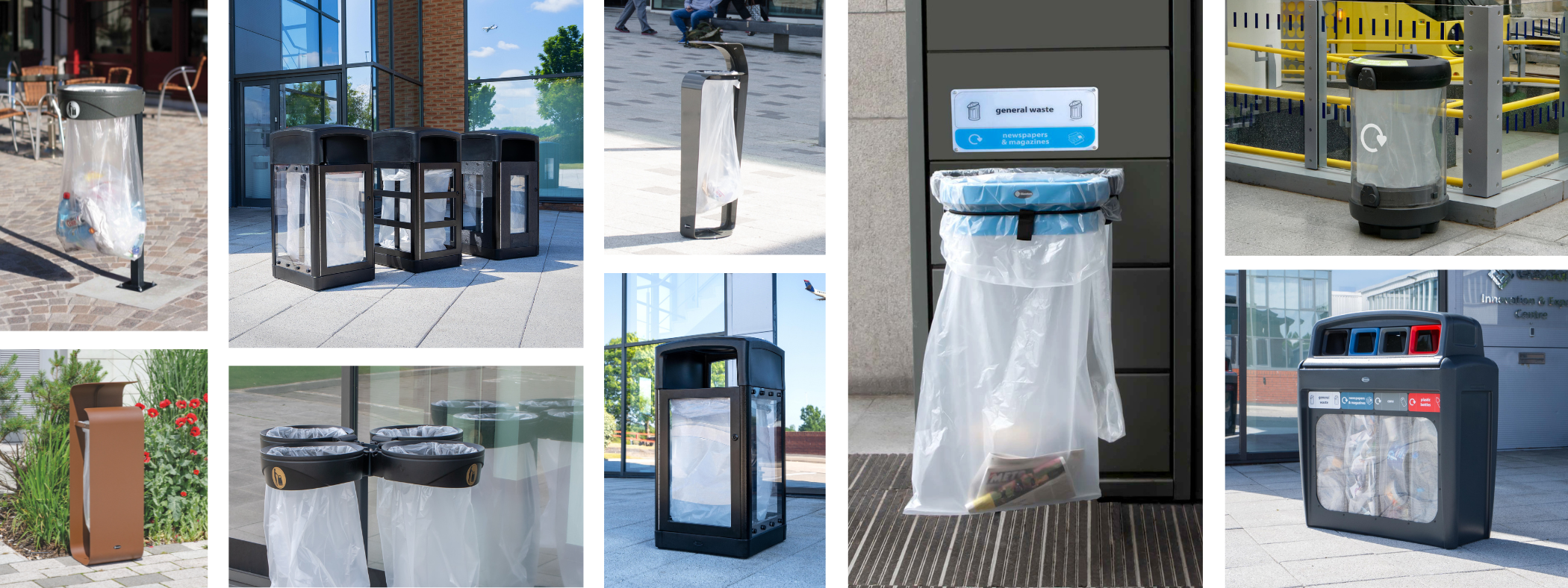
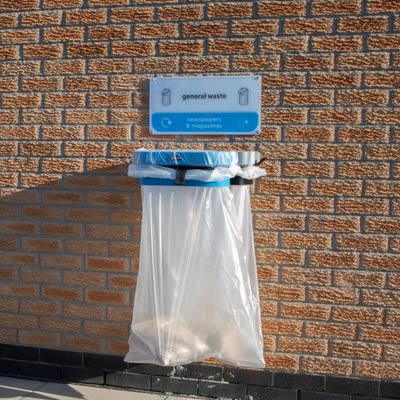
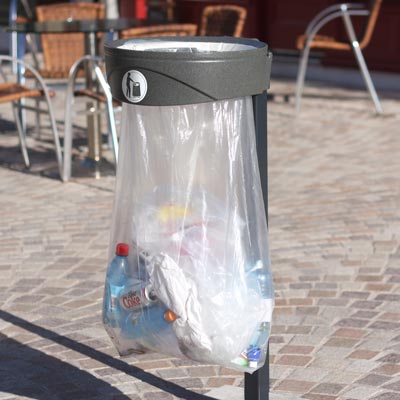
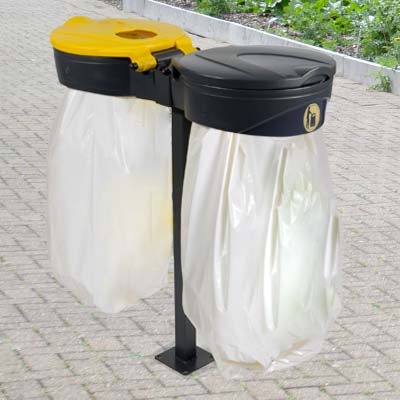
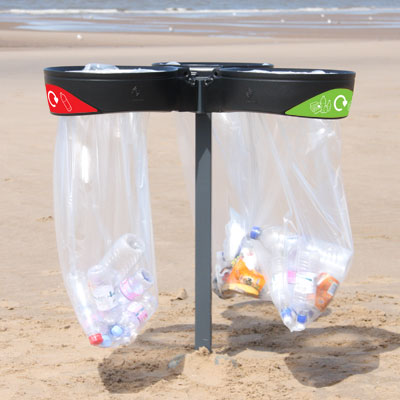
Sack Holders and Stands with See-through Bin Bags
One of the easiest and most affordable resources that can fit into a venue’s security framework are see-through bin bag holders. Most commonly, simply a wall- or surface-mounted ring with a simple transparent, plastic bag hanging from it, these waste solutions are easy to install, easy to empty and offer increased security.
Please Note:Transparent waste containment systems are not required by Martyn's Law. However, some venue operators may consider them as part of broader security and risk-management strategies where appropriate.
|
TSU Sack Holder |
Orbis Sack Holder |
Orbis Double Sack Holder |
Orbis Triple Sack Holder |
||||
 |
 |
 |
 |
||||
|
Learn more |
Learn more |
Learn more |
Learn more |
Sack holders and stands with see-through bin bags offer multiple great benefits at public venues:
- Reduced risk of concealment
- Easier and quicker detection of foreign objects and IEDs
- Higher deterrence factor for potential culprits
- Little to no shrapnel
Additionally, the standard wall-mounted Glasdon TSU™ Sack Holder has been tested to be compliant with the UK’s Home Office Publication No 23/13, achieving a 3-star blast performance rating, and even exceeds the Home Office (UK) transport security requirements.
Discover our full range of contemporary-styled sack holders and stands.
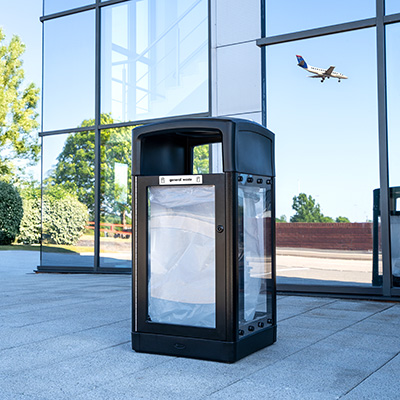
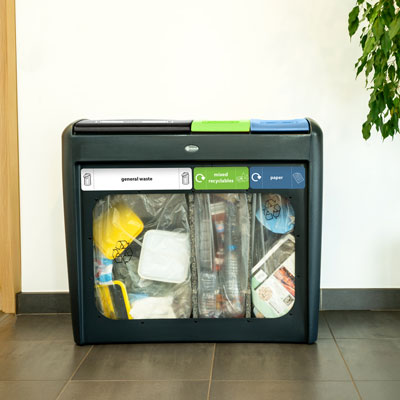
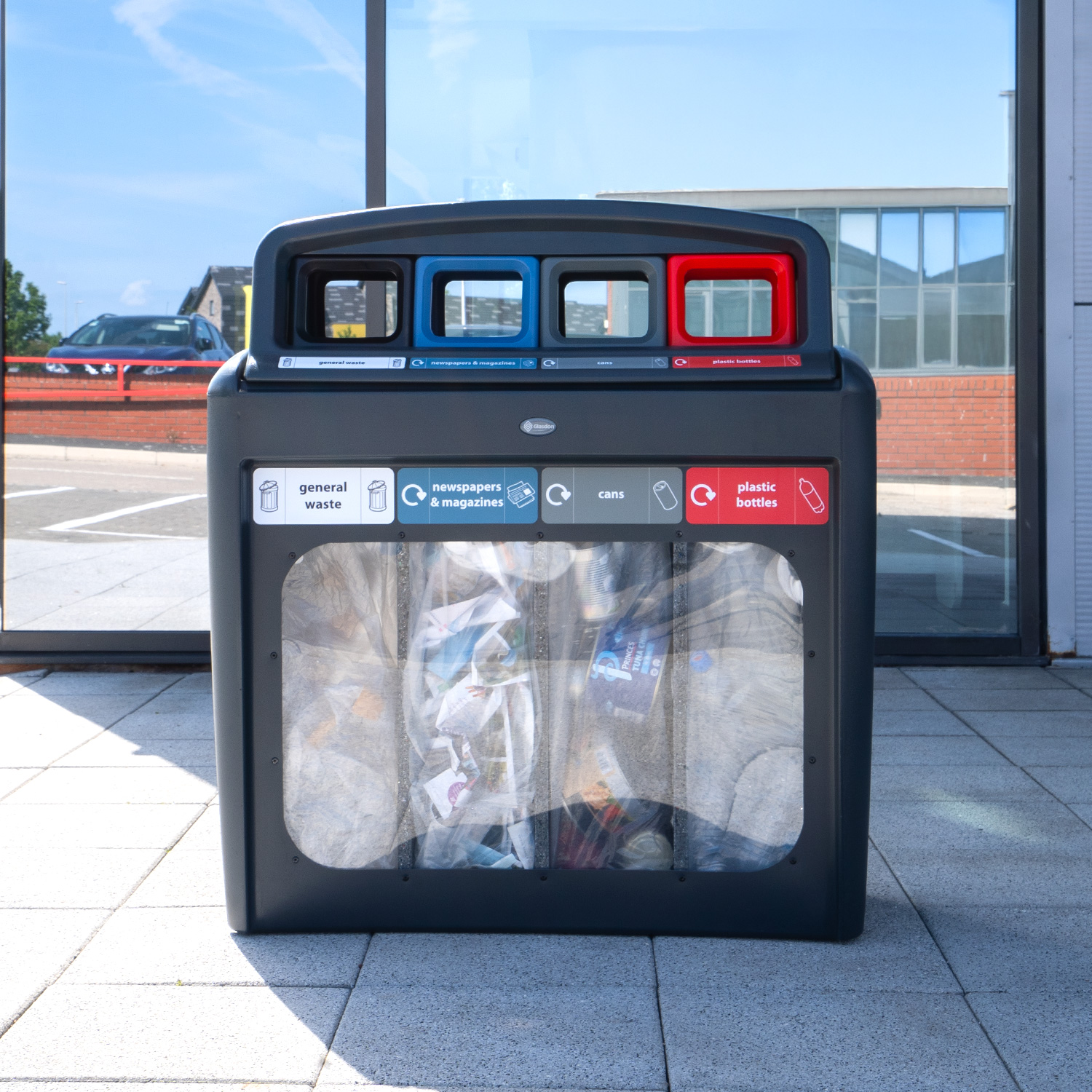
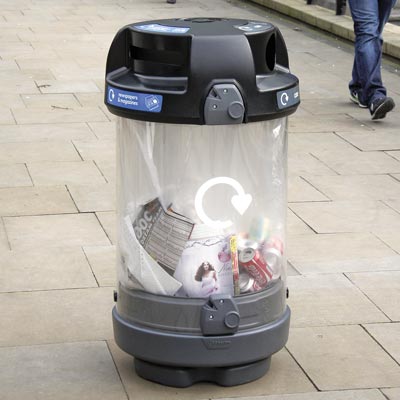
Transparent Security Bins
Transparent Security bins offer similar levels of security and peace of mind. Whilst not as compact as sack holders, they provide higher capacities and the possibility for multiple waste streams to avoid cross contamination alongside the same great security benefits.
|
Origin Security Bins |
Nexus® Evolution Bins |
Nexus® Evolution City Bins |
C-Thru™ 180 Bins |
||||
 |
 |
 |
 |
||||
|
Learn more |
Learn more |
Learn more |
Learn more |
Transparent security bins provide a variety of great benefits for public venues:
- Rapid visual threat detection
- Elimination of secondary shrapnel
- Pest and odour control
- No cross-contamination
Discover our full range of transparent security bins.
If you would like more information on this topic or to learn more about how Glasdon's materials adhere to the PLE philosophy, please contact us today.
References
* https://www.enfield.gov.uk/services/community-safety/protect-duty-martyns-law
* https://www.gov.uk/government/publications/the-terrorism-protection-of-premises-act-2025/terrorism-protection-of-premises-act-2025-statutory-guidance
*https://homeofficemedia.blog.gov.uk/2025/04/03/martyns-law-factsheet/
* https://www.gov.uk/government/publications/martyns-law-for-education-settings/how-martyns-law-will-affect-education-settings
* https://www.dorsetcouncil.gov.uk/w/martyn-s-law-protect-duty
* https://www.gov.uk/government/news/martyns-law-introduced-to-parliament-to-better-protect-the-public-from-terrorism#:~:text=The%20new%20legislation%2C%20also%20known,to%20protect%20them%20from%20harm.